ell Lie Vision poster series hero image showing three posters side by side representing television and mass communication across different countries, designed by The World District.

Communication Forms Our Perception of The World

Communication Forms Our Perception of The World

"Tell-lie-vision" is a cynical play on the word television: the idea that TV tells lies to your vision. That's where it started. Researching it, I realized something bigger: communication has always shaped perception. Stories around the fire. The stone. The printing press. The screen. It was never neutral.

“Tell-lie-vision” is a cynical play on the word television: the idea that TV tells lies to your vision. That’s where it started. Researching it, I realized something bigger: communication has always shaped perception. Stories around the fire. The stone. The printing press. The screen. It was never neutral.

The process

The process

I used AI as a creative tool, not a shortcut. There is a lot of fear around AI in the creative industry. As I see it, AI is a new tool. Like Photoshop was once a new tool. Like the printing press was once a new tool.

For each poster I used AI image generation to create a scene of people from a specific country, sitting in a typical living room of that country, watching television from behind. The perspective was intentional. You are watching them watch.

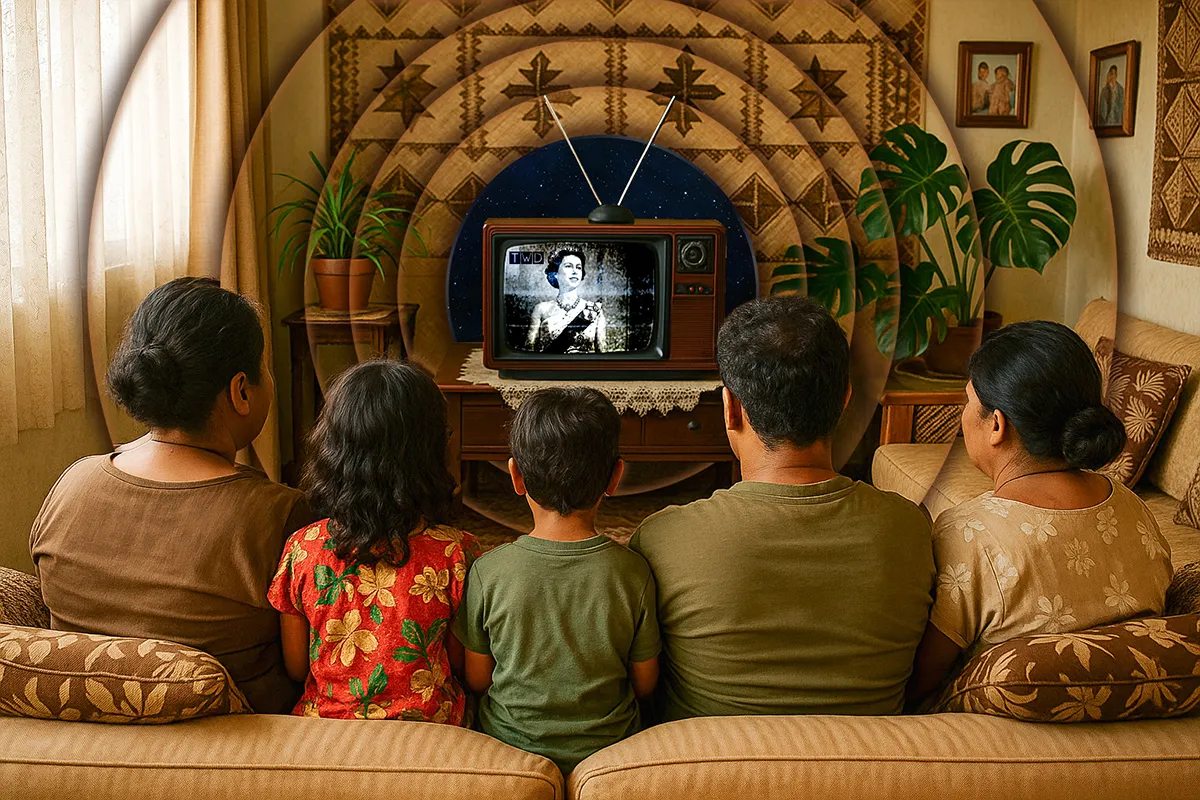
Tell Lie Vision Tonga poster: AI-generated family watching television in traditional living room, unedited render
Tell Lie Vision Tonga poster: AI scene composited onto vintage TV set with concentric circle overlay, Photoshop process
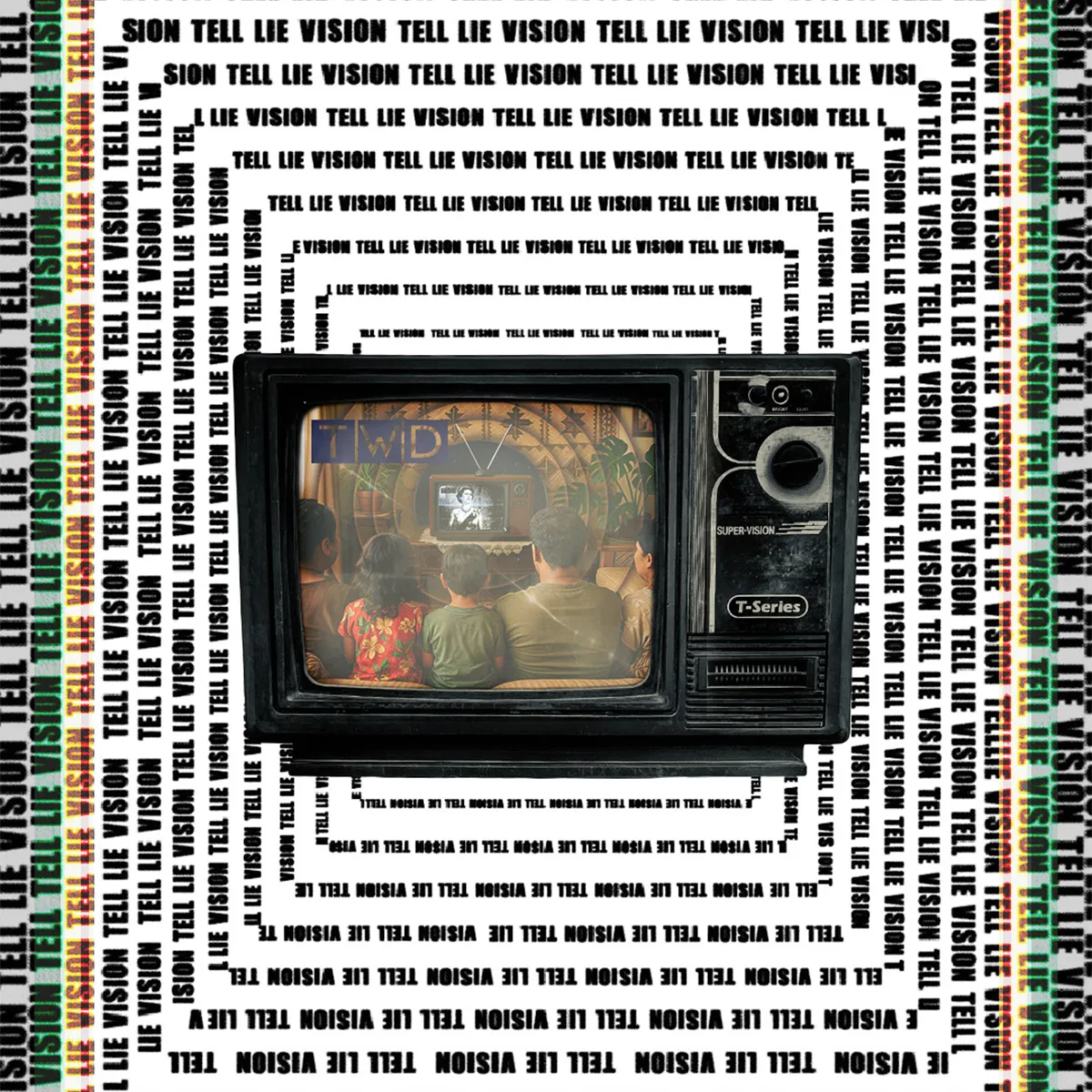
Tell Lie Vision Tonga poster. vintage TV with a family watching, framed by repeating typographic border.

I brought those generated images into Photoshop and composited them onto real vintage television sets sourced from Unsplash. Real object. Generated scene. The line between authentic and constructed, intentionally blurred.

On each screen I added content, then built concentric circles radiating outward from the TV, representing the hypnotic pull of the broadcast. I designed an original TWD lettermark placed on screen to imitate a television channel logo. Even the brand becomes part of the signal.

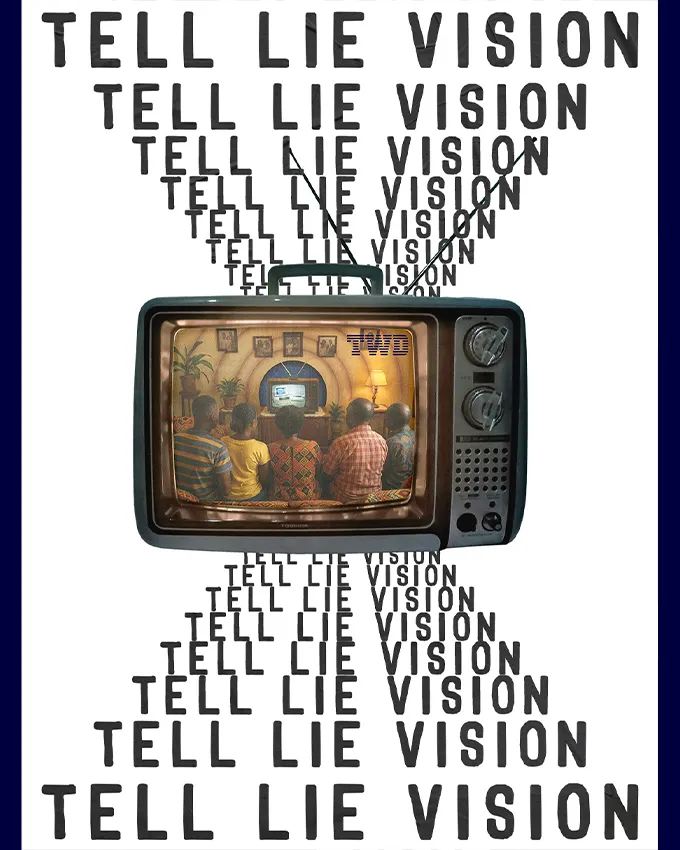
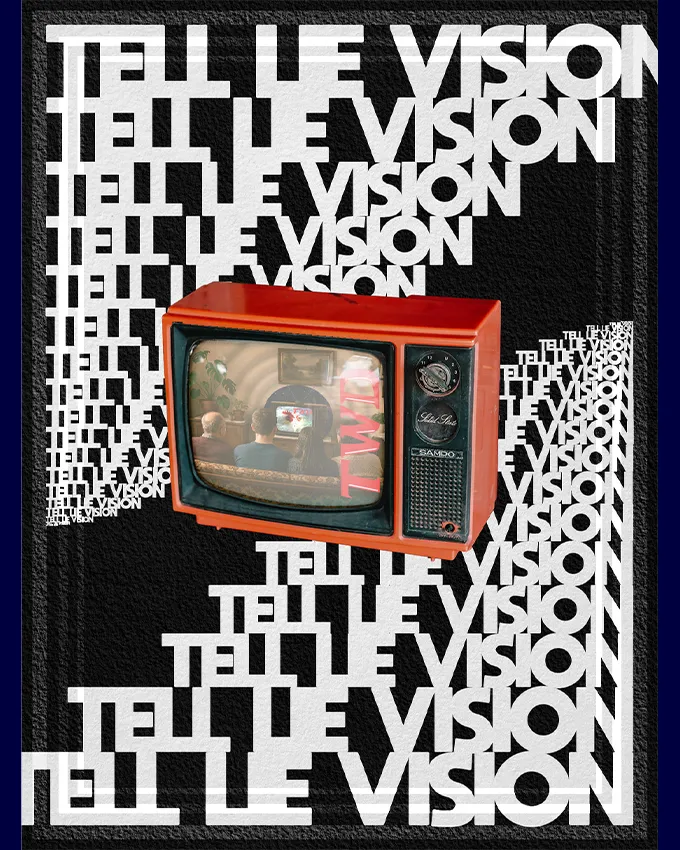
The typography was built from existing fonts, then manipulated, repeated and distorted differently for each poster. Different weight, different scale, different energy. Each one its own visual language.

The final layer: you view these on a phone. On your phone is a poster. In the poster is a TV. On the TV is a family watching a TV. You are doing exactly what they are doing.

Nobody is outside the signal.
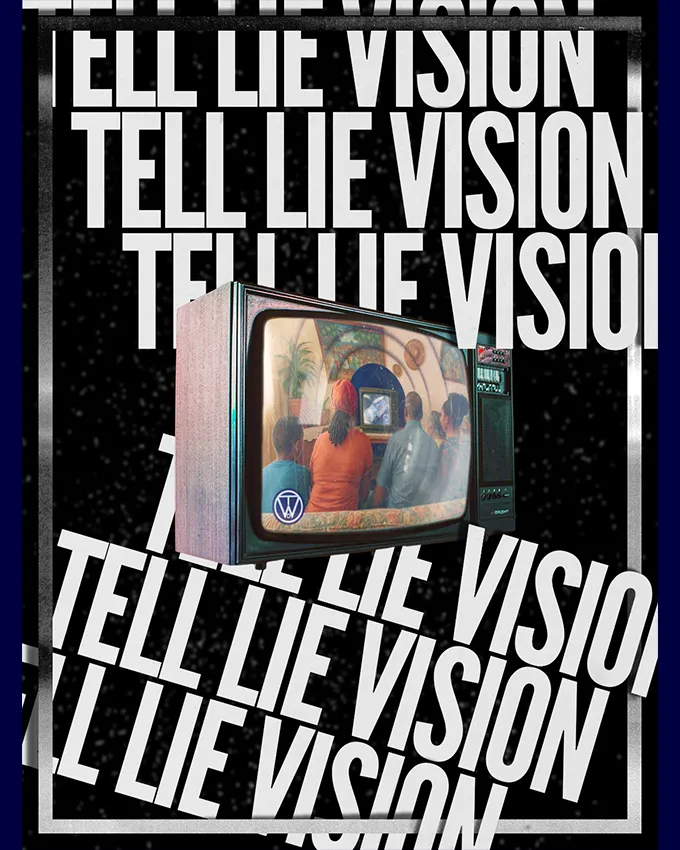
Tell Lie Vision Haiti poster: family watching television in an archway-framed living room with potted plant, wood-paneled vintage TV set
Tell Lie Vision Kenya poster: family in patterned clothing watching television below a wall of framed photos, rounded vintage TV with top handle
Tell Lie Vision Serbia poster: two figures watching television on a red vintage Sampo TV set, black textured background

New tools open new doors. AI didn't replace the work, it changed where the work started. I still had to choose the country, build the scene, layer the signal, make the decisions that turn a render into a poster. The tool changed. The eye didn't.

This is what excites me about where creative work is heading. Not fewer decisions, different ones.

See the full nine-poster series, on our Instagram

Link to The World District Instagram

© 2023-2026 The World District. All rights reserved

Company

About Us

Portfolio

Lets Work

Socials

© 2023-2026 The World District. All rights reserved

© 2023-2026 The World District. All rights reserved